Straight answers from a roofer in North London.

The roof is leaking after the storm. Is it urgent, and will insurance pay?

Tell us what is coming in, where and since when. We pass it to a roofer who works in Barnet, so you can ask what needs doing first. Photograph the damage for your insurer before anybody touches it.

Key information

  • Almost nothing about a roof leak is safer at 11pm than at 8am. Nobody should be on a wet roof in the dark, including a roofer.
  • The one real emergency is a slipped ridge tile or a leaning chimney pot that could fall onto a pavement or a neighbour. That is about what is under the roof, not the leak.
  • Photograph everything before anything is touched or tidied. That evidence is what decides the insurance claim later.
  • Wear and tear is the commonest reason a storm claim is declined, and it is not the end of it. The onus is on the insurer to prove the exclusion applies.
  • Free first step: tell us what you can see and we will pass it to a roofer.
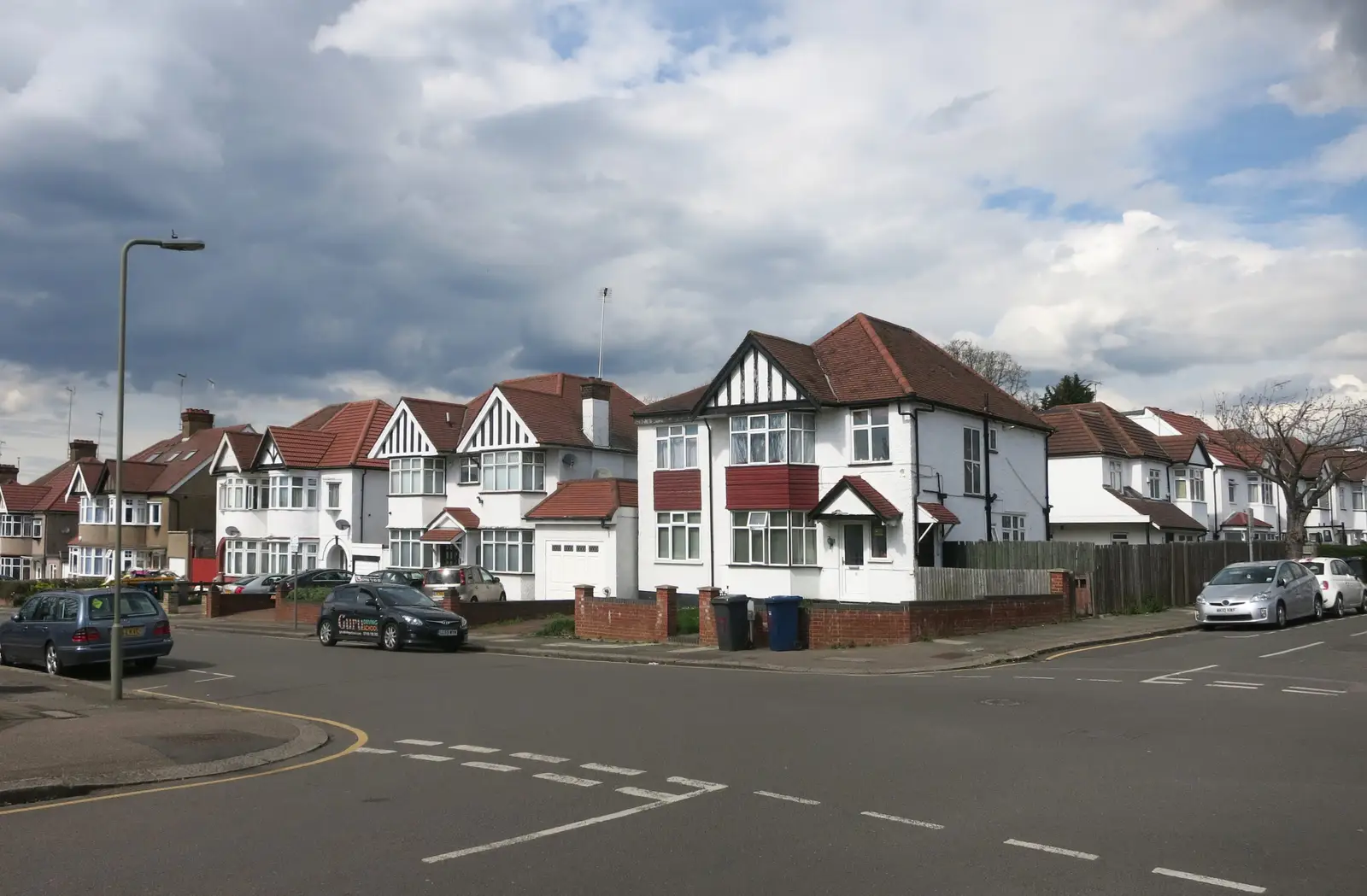
Semi-detached 1930s houses on Hendale Avenue, Hendon, with tiled roofs and chimneys under a stormy sky.
Hendale Avenue, Hendon, under a stormy sky. Photo: Des Blenkinsopp (CC BY-SA 2.0)
First step
Free enquiry
Reply time
We reply by email, usually within one working day.
Who answers
Ryan Harry, Harrow Roofing and Building
Patch
NW, N, HA, EN, WD and around

The three questions people arrive with

Verdict first, reasoning second. If you are on a phone late at night, the first line of each card is the answer.

Do I need someone tonight?

Almost certainly not. Move what is underneath, put a bowl down, photograph everything before you touch it, and if the ceiling is bulging or soft get everyone out from under it. The roof itself gets looked at in daylight. The exception is anything that might fall into the street: a slipped ridge tile or a leaning chimney pot is a genuine emergency, and it is an emergency about the pavement rather than about your ceiling.

Will the insurer actually pay?

More often than people expect, and a refusal is not final. The Financial Ombudsman asks three things: were there storm conditions around that date, is the damage the sort that storms cause, and were the storm conditions the main cause. Wear and tear is the commonest decline, but the onus is on the insurer to prove the exclusion applies, and 38 per cent of buildings insurance complaints reaching the Ombudsman in 2025 to 2026 were upheld for the consumer.

Do I need a whole new roof?

Check for a repair first. Which? says it is almost always more cost effective. Which? says a repair is almost always much more cost effective, unless it is unlikely to solve the problem or last. Its guide price for replacing one to six standard tiles is £75 to £400 plus VAT. A new tiled roof on an average three-bedroom house is £7,000 to £21,000 plus VAT. Access and scaffolding can push the price up. Have the whole roof inspected and compare a few quotes. If a quote goes straight to a new roof, ask for photographs and a written reason why it cannot be repaired.

Warning signs worth checking now

Things you can look at in the next five minutes, with no tools.

Look in the loft with a phone torch

Three things only. A wet line running down a rafter or a wet patch on the underside of the felt. Daylight coming through. And whether the insulation is soaked in one place or damp all over. Do not start moving boards about in the dark.

Look at the shape of the stain, not the size

A tight round or teardrop stain with a defined edge is a point-source leak, which means one specific thing is broken. A large soft diffuse dark area with no clean edge is more often condensation or a long slow ingress, and that is a different job entirely.

Time it against the rain

Does it only drip while it is actually raining, and stop within an hour or two of the rain stopping? That is water getting in and running straight through. A drip that carries on in dry weather means water is sitting somewhere in the structure, and that is both more serious and more urgent.

Check the window head and the wall-ceiling junction

Damp under an upstairs window, or where the wall meets the ceiling, is very often not the roof at all. It is a blocked gutter, a downpipe or a window seal. The Association of British Insurers specifically tells people to look for damp patches around windows and doors.

Look at your roof from a window, and at your neighbours'

You can usually spot a slipped ridge tile, a dark gap where a tile has gone, or slates lying in the garden without leaving the house. Look up and down the street too: if three houses lost tiles, that is real evidence supporting a storm claim, and the Ombudsman treats nearby damage as relevant.

Put a flat hand on the ceiling stain

Cold and damp but firm is one thing. Soft, bulging, or giving under light pressure is the point at which you stop checking anything else and move everyone out from underneath.

If more than one of these sounds familiar, tell us what you can see.

Why this happens

Most cases come down to a short list. The job is to work out which, and to rule out the ones that matter.

One slipped or missing tile

It feels catastrophic because the water lands in the middle of a bedroom, but it is usually one or two tiles let go by a corroded nail or clip, with the roof either side perfectly sound. The insurers' own wear and tear list names corroded nails and clips.

What to do: A repair, not a re-roof. Get it photographed from a ladder or a drone before anyone quotes.

A blocked gutter overflowing behind the fascia

A blocked gutter can look like a roof leak. The storm is what dumped the debris in it. Water backs up behind the gutter and runs down inside the wall or into the eaves.

What to do: Clear the gutters first. It is worth ruling out before anyone quotes for the roof.

Cracked mortar on the ridge or hip

Insurers list cracked pointing around chimneys and ridges as ordinary wear and tear, which matters for the claim.

What to do: Re-bedding a ridge is a routine job. If a ridge tile is actually loose, treat it as urgent for what is below it.

Failed flashing at a chimney or abutment

Where the roof meets a chimney, a party wall, a back addition or a dormer cheek. Lead work perishes, lifts or was never dressed properly in the first place.

What to do: Ask for a photograph of the flashing specifically. It is a common and fixable failure point.

A split flat roof on the back extension

Not the main roof at all. Insurers are explicit that flat felt roofs begin to sag or split and typically need maintenance or renewal every 10 to 15 years, so on an older flat roof this genuinely can be an end-of-life conversation.

What to do: Find out the age of the covering before deciding between a patch and a recover.

Condensation in the loft, which is not a leak

The underside of the felt beaded with moisture over a wide area rather than wet in one line, insulation generally damp rather than soaked in one spot, worse in cold weather, and often worse since someone boarded the loft or vented a bathroom or tumble dryer into it.

What to do: This needs ventilation, not roofing. No roofer should sell you a roof for it.

What happens next, cheapest first

We scale the response to the problem. Most enquiries do not need the bigger step, and we will tell you if yours does not.

  1. Free enquiry

    Tell us what you can see from a window or the pavement and your postcode. We pass it to Harrow Roofing and Building. Do not go up on the roof.

    CostFree TimeWe aim to pass it on the same working day

  2. Make it safe and keep the water out

    Temporary emergency repairs to stop the damage getting worse, in daylight. Speak to your insurer before the work and keep the receipts, because that forms part of the claim. Anything that could fall into the street comes first.

    CostDepends on access. Speak to your insurer first and keep receipts TimeWhen it is safe. Anything that could fall comes first

  3. The repair, with photographs

    A handful of tiles, a re-bedded ridge, new lead flashing, or a gutter clear. A written quote with photographs of the whole roof, so that you and your insurer can both see what was found.

    CostGuide price £75 to £400 plus VAT for one to six tiles (Which?) TimeAsk for a start date and working time in the quote

Things that are usually fine

Straight from Ryan, who would rather tell you now than charge you later.

A frightening roof leak can be one slipped tile, a blocked gutter, loft condensation or wind-driven rain. Have it looked at before anyone quotes for a new roof.

Ryan Harry, Harrow Roofing and Building

Rain driven hard by the wind can get in where ordinary rain does not. Tell the roofer whether it has happened once or keeps coming back. Have it checked either way.

Ryan Harry, Harrow Roofing and Building

A declined claim is not the end. The Financial Ombudsman says the insurer has to prove that an exclusion applies. Complaining to it is free.

Ryan Harry, Harrow Roofing and Building

Roofer: who to call

How we choose.

Recommended

Referred by other local business owners we work alongside. Not an editorial review.

Show 3 other businesses serving Hendon

Also serving Hendon

Local businesses checked against public sources: their own websites and the public registers.

Abbeygale Roofing

Based in Neasden. Covers Neasden, St John's Wood, Finchley, Barnet and West Hampstead.

Family-run roofing company: new roofs, repairs, flat roofs and guttering for homes and businesses across north west London.

HJR Roofing Services

Based in South Hampstead. Covers Golders Green, Hendon, Barnet, Finchley and Edgware.

Family-run roofers in South Hampstead for new roofs, repairs, maintenance, guttering and UPVC across London and Hertfordshire.

R F Mummery Roofing

Based in Pinner. Covers Pinner, Finchley, Hampstead, Northwood, Hendon and Ruislip.

Roofers based in Pinner for new roofs, flat roofs, repairs, chimneys and heritage roofing across north west London.

Tiers reflect membership of business groups we work alongside, not paid placement. Nobody pays to be listed.

Sometimes this is really a job for a different trade. We also refer to water damage restoration and builder, and we say so when it is.

Questions people ask

Does the wind have to reach 55mph for it to count as a storm?
No, and this is one of the most repeated errors on this subject. The Financial Ombudsman's current guidance states no wind speed figure at all. The 55mph number comes from the Association of British Insurers, and it refers to gusts. The Ombudsman has said in a published case that wind speed should not be a deciding factor, and that in some cases rain, hail or snow on its own can amount to a storm.
What does the Ombudsman actually ask?
Three questions. Were there storm conditions on or around the date. Is the damage consistent with what is generally seen as storm damage. And were the storm conditions the main cause, or were there other factors meaning the damage might have happened anyway. Most declines turn on the third one.
They said it is wear and tear. Is that it?
No. It is the commonest reason a storm claim is declined, but the onus is on the insurer to prove the exclusion applies. A clear, detailed contractor report with photographs is what shifts these, and the Ombudsman has said that reports explaining the expert's thinking, supported by photographs, tend to be the most persuasive. Complaining to your insurer is free, they have eight weeks to respond, and the Ombudsman is free after that.
Can I go up and look myself?
It is not illegal. The Work at Height Regulations place duties on employers, the self-employed and anyone controlling someone else's work, not on a householder on their own ladder. The argument against it is not legal, it is actuarial: 31 workers were killed by falls from height in Great Britain in 2025 to 2026, about a quarter of all worker deaths, and those were trained people with proper equipment in daylight. Not in the wet, not in the dark, and not to fix anything.
Should I get a temporary repair done first?
Yes, if it is safe and stops the damage getting worse. The Association of British Insurers says to speak to your insurer first. Keep an itemised invoice, because it forms part of your claim. Photograph the damage before the temporary repair covers it up.
A ridge tile is loose and the path is below it. What now?
Treat that as the urgent part, ahead of the leak. If something falls and the council has to make the building safe, the owner pays for that. Keep people away from underneath it and get it dealt with as the first job rather than the last.
What does a new roof cost?
The Federation of Master Builders, in figures dated November 2025, puts a re-roof on a two-bedroom terrace of around 60 square metres at £7,500 to £12,500, and a three-bedroom semi of around 80 square metres at £10,000 to £15,000. Those two bands cover most Hendon and Barnet housing. Scaffolding is roughly £400 a day on top, plus a council licence if it stands on the pavement.
How do I find a roofer I can trust?
The National Federation of Roofing Contractors vets its members before they join and every three years afterwards. Their own advice is worth following: get quotes from several contractors, do not automatically take the cheapest, get it in writing, and be wary of anyone offering a cash or VAT-free deal, because they are hard to trace if something goes wrong.
Do you cover Hendon and Mill Hill?
Yes. Hendon, Mill Hill, Finchley, Edgware, Golders Green, Colindale and Barnet are our core patch, with members across North London and Hertfordshire.
What if I am outside North London?
Tell us the postcode. If nobody we recommend covers your area we will tell you.
Further reading: Financial Ombudsman Service: storm damage claims, NFRC: find a vetted roofing contractor and The Work at Height Regulations 2005.

Where we cover

Hendon, Mill Hill, Finchley, Edgware, Golders Green, Colindale, Barnet and the rest of North London and Hertfordshire. If you are outside this area, tell us where you are and we will point you to someone who covers you.

Not sure whether it is anything?

Tell us what has happened and your postcode. We tell you whether it needs anyone and what to do next. We reply by email, usually within one working day.

What's New in North London, every Thursday

What's opening, what's on and what's changing in Hendon. One free email.