Straight answers from a drainage engineer in North London.

The drain is backing up. Is it my problem or the water company's?

Tell us which fixtures are affected and whether the neighbours have it too. That answers who owns the pipe, and there is a good chance it is not you. Establishing that costs nothing and can save the whole bill.

Key information

  • Do not flush again. If the toilet is hard to flush, draining slowly, or bubbling, flushing again can push sewage into the house.
  • The law changed on 1 October 2011. The pipe from your boundary to the public sewer is the water company's, and so is any pipe shared with a neighbour, even under your own garden.
  • Report a blockage to Thames Water on 0800 316 9800 before you pay anyone. Checking ownership is free.
  • One fixture affected means it is inside your property. Every fixture affected means it is downstream, and downstream is where it stops being yours.
  • If sewage gets inside the house from their sewer or lateral drain, an automatic payment of between £300 and £2,000 is due, per incident.
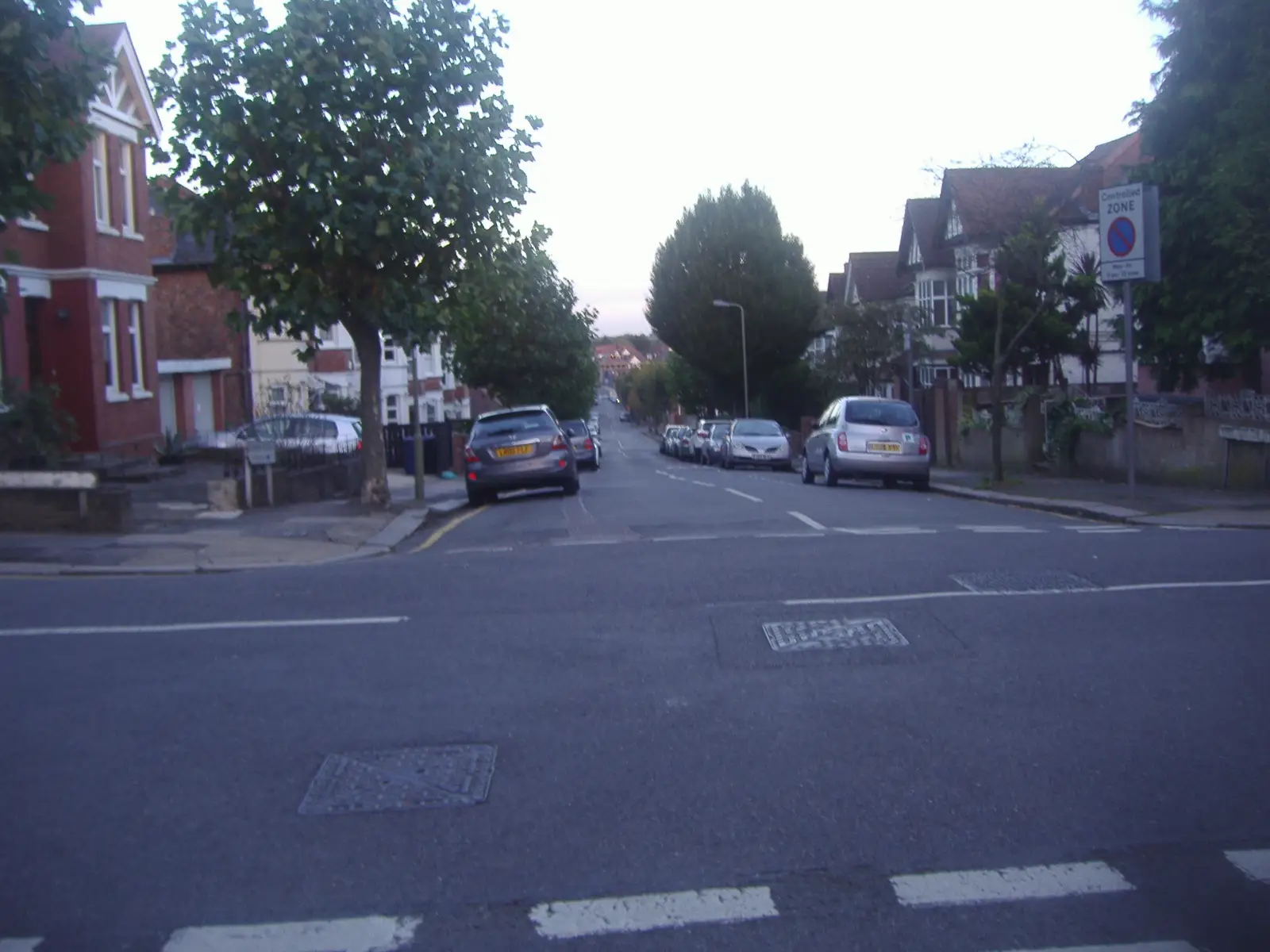
The junction of Graham Road and Audley Road, Hendon, with drain and manhole covers in the road.
Graham Road at Audley Road, Hendon. Photo: David Howard (CC BY-SA 2.0)
First step
Free enquiry
Reply time
We reply by email, usually within one working day.
Who answers
Our listed drainage engineers until we have a recommended one
Patch
NW, N, HA, EN, WD and around

The three questions people arrive with

Verdict first, reasoning second. If you are on a phone late at night, the first line of each card is the answer.

Whose pipe is it?

Quite possibly not yours. Since 1 October 2011 the water company owns the lateral drain, which is the part running from your property boundary to the public sewer, and it owns any drain shared with a neighbour even where it passes under your garden or driveway. What stays yours is the pipe that serves only your property and lies inside your boundary. Up to half of properties in England and Wales are connected to what used to be a private sewer.

Is it a collapse?

Almost never. Blockages cause over 60 per cent of all sewer flooding, and Thames Water clears around 75,000 of them a year. Their entire prevention campaign is about wipes and cooking fat, not structural failure. If water is still moving at all, even slowly, the pipe is still there. Partial flow is the tell.

What is it going to cost?

Nothing, if the blockage is in a pipe Thames Water is responsible for. If the blockage is on their side, they clear it and there is no bill. No UK drainage trade body publishes current consumer prices, which is worth knowing when someone quotes you at midnight. The one thing that reliably costs money is paying a private contractor to clear a pipe you do not own.

Warning signs worth checking now

Things you can look at in the next five minutes, with no tools.

Count how many fixtures are affected

Thames Water's own test. If upstairs is affected but downstairs is working, that suggests a blockage inside the property. If everything is backing up, it is downstream of the whole house. Downstream is where responsibility often shifts to them.

Flush once, then listen at the bath or basin

A gurgle is air being displaced past a partial obstruction further down. That tells you it is partial rather than solid. Then stop. Do not flush again to see what happens, because that is how sewage ends up on the bathroom floor.

Watch which fixture overflows first

Water finds the lowest way out. If the downstairs toilet is rising while the upstairs still drains away, the blockage is below the ground floor connection, which is the shared or public run, and quite possibly not your problem at all.

Message a neighbour

It is free and it settles the question. If more than one property is having trouble, that points at the shared or public sewer. If nobody else has a problem, it points at your pipe. Thames Water uses exactly this test themselves.

Think about the last few hours of weather

Heavy or continued rain can overwhelm the foul sewers, which is called hydraulic overload. A family of four makes around 570 litres of wastewater a day, while one average house sheds around 5,500 litres an hour off the roof and drive during a storm. That is their system, not your pipe.

Look at the chamber cover, only if it is safe and light

If the access point is clear, the blockage is likely to be inside your home. If it is full, the blockage is downstream of it, which narrows the search and often moves it off your land. Do not lift a cover in the dark, do not lean over an open chamber, and keep children and pets away.

If more than one of these sounds familiar, tell us what you can see.

Why this happens

Most cases come down to a short list. The job is to work out which, and to rule out the ones that matter.

Wipes and other things that should not be flushed

The strongest evidence of any cause on this page. Thames Water clears 75,000 blockages a year at a cost of around £40 million, and says plainly that there is no such thing as a flushable wipe. Around 3.8 billion are used a year.

What to do: Bin them. If the blockage is in your own run, this is also the thing that will cause it again in six months.

Fats, oils and grease

Poured down the sink as a liquid, set solid in the cold pipe further along. Combined with wipes, this is what a fatberg actually is, and it is the classic cause in a terraced street with shared drainage.

What to do: Let it cool and bin it. Running the hot tap moves the problem twenty feet down the pipe rather than removing it.

Tree roots

Roots find a joint, get in as hairs and grow into a mat that catches everything passing. They can grow back, so it can happen more than once.

What to do: If this is the second or third blockage in the same spot, ask for a camera survey rather than another jetting visit.

A displaced or collapsed clay pipe

Victorian and interwar clay, or pitch fibre from the 1950s to 1970s in the postwar estates around Colindale and Burnt Oak. Insurers commonly exclude pitch fibre, which is worth knowing before you claim.

What to do: This is what a CCTV survey is for. It is also the finding that decides between relining and digging.

Heavy rain overwhelming a combined sewer

Thames Water calls it hydraulic overload, and they say their sewers are mostly foul, some Victorian, and designed for a much lower population. Barnet says separately that highway gullies are not designed for heavy storms.

What to do: Report it and record it. This one is theirs, and repeated incidents trigger both investigation duties and escalating compensation.

One foreign object

A toy, a cistern block, cotton pads, dental floss, hair. Localised, sudden, and usually affecting one fixture rather than the whole house.

What to do: If it is one fixture, look at the trap under it first. That is often the whole job.

What happens next, cheapest first

We scale the response to the problem. Most enquiries do not need the bigger step, and we will tell you if yours does not.

  1. Free enquiry

    Tell us which fixtures are affected, whether neighbours have it and whether it has rained. The checks on this page show whose pipe it probably is. Report it to Thames Water before you pay a contractor.

    CostFree TimeWe aim to read it the same working day

  2. Report it to Thames Water on 0800 316 9800

    If it is their sewer or lateral drain, they deal with it and you do not get a bill. You can also inspect the public sewer map free of charge to see whose pipe it is. Keep a note of the call and who you spoke to.

    CostFree if the blockage is on their side TimeThames Water aims: sewage indoors 4 hours, outdoors 24 hours

  3. A camera survey, if it keeps happening

    Repeat blockages in the same place mean roots, a displaced joint or a partial collapse. A survey is what stops you paying for a fourth clearance, and it is what decides between relining the pipe and excavating it.

    CostAsk for a fixed price before anyone attends TimeAsk how long it takes when you book

Things that are usually fine

Straight from the people who do this work every week.

Most backing-up drains are a soft blockage rather than a collapse. Blockages cause over 60 per cent of all sewer flooding, and if water is still moving at all, even slowly, the pipe is still there.

Thames Water published figures

A full chamber outside is often good news. It tells you the blockage is downstream of that chamber, which narrows the search, and after the 2011 transfer it frequently puts the problem on the water company's side rather than yours.

Water Industry (Schemes for Adoption of Private Sewers) Regulations 2011

The pipe may not be yours at all, and plenty of people pay to clear something they do not own. Establishing ownership costs nothing: ring the water company first, and you can inspect the public sewer map free of charge.

Water Industry Act 1991, section 199

Drainage engineer: who to call

How we choose.

Serving Hendon

Local businesses checked against public sources: their own websites and the public registers.

Diligent Drainage

Based in Finchley. Covers Finchley, Barnet, Mill Hill, Totteridge and Whetstone.

Emergency drain unblocking, drainage and plumbing repairs across north London, including Barnet, Finchley and Mill Hill.

Dynamo 24/7

Covers Mill Hill, Hendon, Colindale, Edgware, Golders Green and Finchley.

Drain unblocking, cleaning, CCTV surveys and repairs across Hertfordshire and London.

FS Group

Based in Waltham Abbey. Covers Barnet, Finchley, Hendon, Golders Green and Edgware.

Drainage services for blocked drains, jetting, CCTV surveys, repairs and relining across London and Essex.

Pro-Drain

Based in Wembley. Covers Finchley, Hampstead, Wembley, Harrow, Stanmore and Camden.

Independent drainage firm with directly employed engineers: blocked drains, jetting, CCTV surveys and repairs across London since 2004.

Want help choosing? Tell us what you need and we can point you to one.

Are you a drainage engineer? See if the category is available.

Tiers reflect membership of business groups we work alongside, not paid placement. Nobody pays to be listed.

Sometimes this is really a job for a different trade. We also refer to plumber and water damage restoration, and we say so when it is.

Questions people ask

What exactly changed in 2011?
On 1 October 2011 private sewers and lateral drains that connected to the public system transferred to the water companies. A lateral drain is the part of a drain serving a single property that lies outside the property boundary. Around 220,000km of former private pipework transferred. What did not transfer is the drain serving only your property and lying inside your boundary.
The shared drain runs under my garden. Is that mine?
No. A pipe serving two or more properties is a sewer in law, not a drain, and those transferred in 2011 including the sections that run under private land. Thames Water says it directly: they are responsible for sewers you share with your neighbours even if they are under your garden or driveway.
How do I check whose pipe it is?
Ring Thames Water on 0800 316 9800 and report it. You can also inspect the sewer map yourself: water companies must keep records of public sewers and lateral drains and make them available for public inspection free of charge, in map form, at their offices. Establishing ownership before you pay anyone is the single most useful thing on this page.
Sewage came into the house. What am I owed?
If effluent entered your building from the company's sewer or lateral drain, an automatic payment is due equal to your annual sewerage charge, with a minimum of £300 and a maximum of £2,000, for each incident. Severe flooding onto your land is half your annual charge, minimum £150, maximum £1,000. You have to claim that one within three months. Repeat incidents within 12 months increase those figures. Payment is due within 20 working days.
Is there any reason they would not pay?
Yes, and most articles leave this out. No payment is due where the flooding was caused by the customer's own actions, or by a defect, inadequacy or blockage in the customer's own drains, or by an abnormal and unforeseeable event outside the company's control. There is also a three month window to claim if they could not identify you.
Should I just call an emergency drainage firm?
Not first. If the blockage turns out to be on the water company's side, they clear it and you pay nothing. No UK drainage trade body publishes current consumer prices, so ask for a fixed price before anyone attends. Ring the water company, establish ownership, then call a contractor if it really is your pipe.
Does my insurance cover it?
Policies generally only cover pipes you are responsible for, which is another reason to settle ownership first. Be aware that pitch fibre pipe, common in housing built between the 1950s and 1970s, is commonly excluded, and that matters in parts of Colindale and Burnt Oak.
It keeps happening in the same spot. Is that normal?
No, and it is worth treating as a signal rather than bad luck. Repeat blockages in one place usually mean root ingress, a displaced joint or a partial collapse. The statutory compensation for sewer flooding escalates for repeat incidents within 12 months, which tells you Parliament expects repeats to mean something is actually wrong. Ask for a camera survey rather than a fourth clearance.
Do you cover Hendon and Mill Hill?
Yes. Hendon, Mill Hill, Finchley, Edgware, Golders Green, Colindale and Barnet are our core patch, with members across North London and Hertfordshire.
What if I am outside North London?
Tell us the postcode. If nobody we recommend covers your area we will tell you.
Further reading: Report a flood or possible cause of flooding (GOV.UK), Find an NADC certified drainage contractor and Approved Document H: drainage and waste disposal.

Where we cover

Hendon, Mill Hill, Finchley, Edgware, Golders Green, Colindale, Barnet and the rest of North London and Hertfordshire. If you are outside this area, tell us where you are and we will point you to someone who covers you.

Not sure whether it is anything?

Tell us what has happened and your postcode. We tell you whether it needs anyone and what to do next. We reply by email, usually within one working day.

What's New in North London, every Thursday

What's opening, what's on and what's changing in Hendon. One free email.