Straight answers from a water damage specialist in North London.

Water is coming through the ceiling. What do I do first?

Tell us where the water is coming through and your postcode. We pass it to someone who dries buildings for a living. If the ceiling is sagging or the water has reached a light or socket, keep out of the room.

Key information

  • Turn the water off at the inside stop valve, clockwise. Taps will keep running for a few minutes afterwards. Do not force it.
  • If the water is at or near a light fitting, ceiling rose, downlight or smoke alarm, treat it as an electrical problem. Do not touch a switch while standing in water.
  • A flat ceiling with a wet patch is very different from a ceiling that has changed shape. A sag or a dip means get everyone out from under it now.
  • Most wet ceilings are not ripped out. The insurance industry's own drying guide says specialist drying avoids significant strip-out in the vast majority of cases.
  • Free first step: tell us where the water is and we will pass it on.
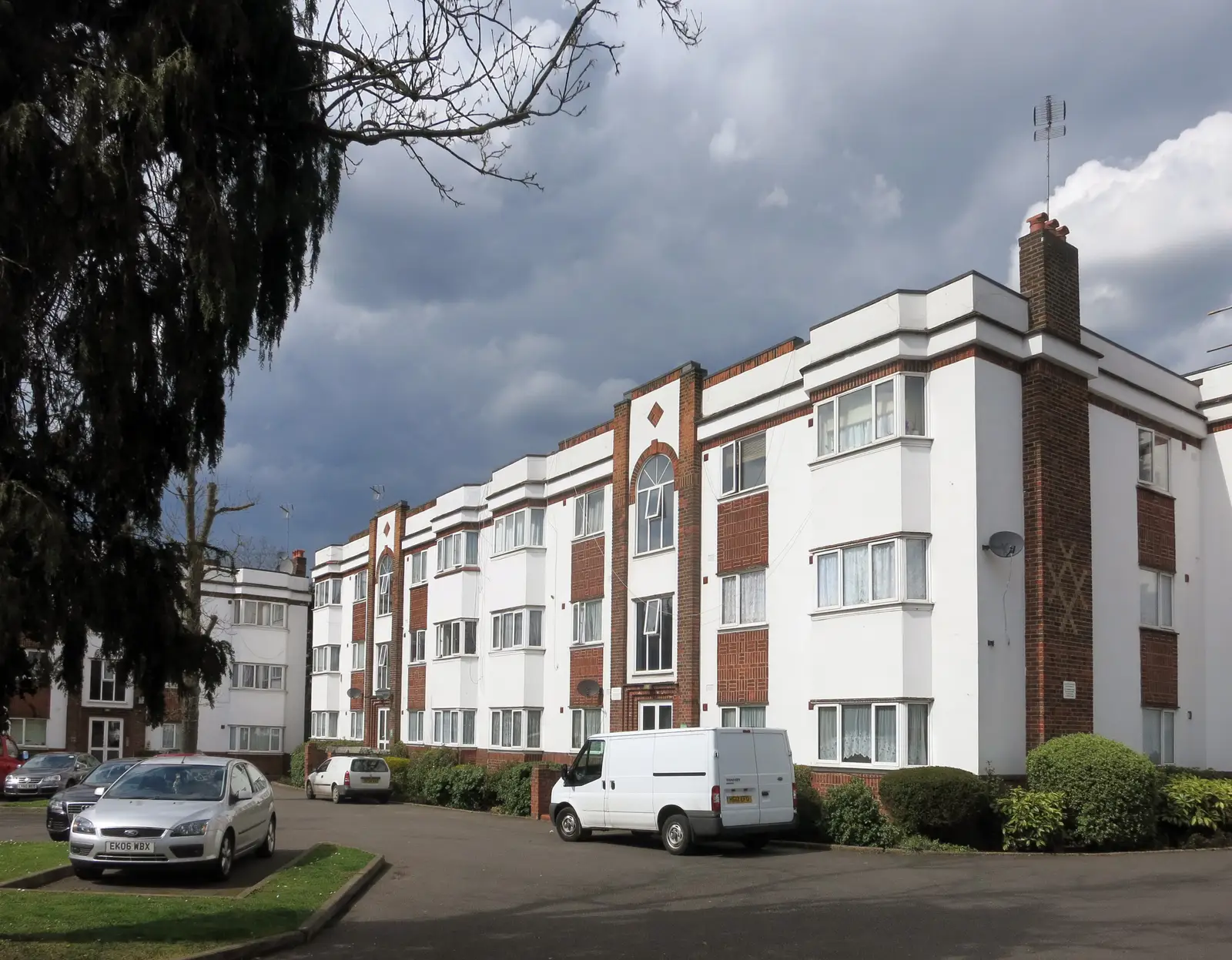
Farm Court, a 1930s block of flats in Hendon with white walls and red brick, under a dark sky.
Farm Court, Hendon. Photo: Des Blenkinsopp (CC BY-SA 2.0)
First step
Free enquiry
Reply time
We reply by email, usually within one working day.
Who answers
Sam Parker, Spera Restoration
Patch
NW, N, HA, EN, WD and around

The three questions people arrive with

Verdict first, reasoning second. If you are on a phone late at night, the first line of each card is the answer.

Is it dangerous?

Usually not, unless it is at a light or the ceiling has dropped. Two things change the answer. Water at or through a light fitting, ceiling rose, downlight or smoke alarm makes this an electrical question: government guidance is do not touch an electrical switch if you are standing in water. And a ceiling that is no longer flat is a collapse risk, because pooled water above plasterboard gets heavy. Everything else is a mess rather than a hazard.

Are they going to rip my ceiling out?

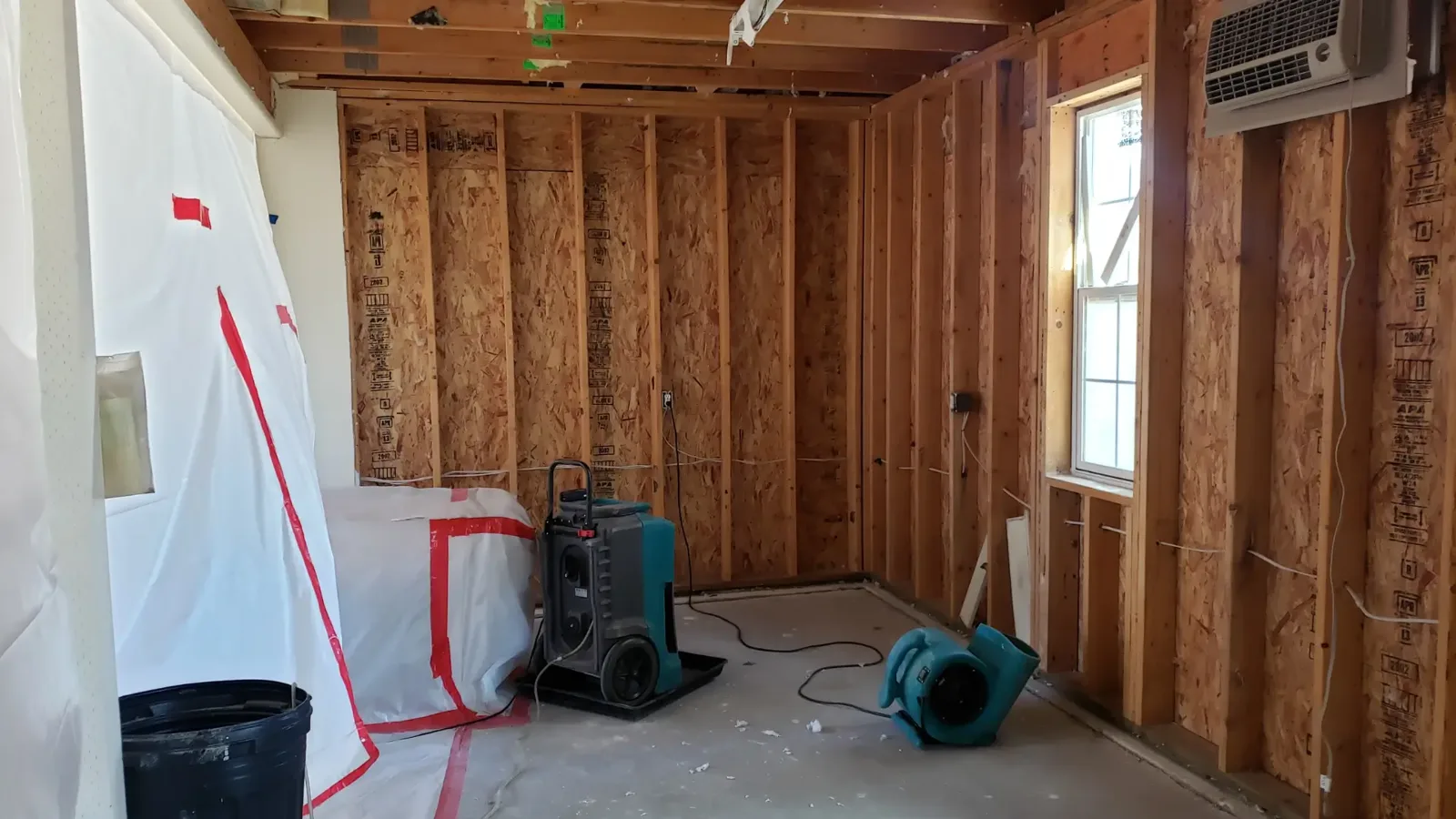
In most cases, no. The technical guide published by the Association of British Insurers with the British Damage Management Association says that specialist drying, used with a light strip-out, will in the vast majority of cases avoid the need for significant hard strip-out, and that floorboards and joists can usually be cleaned, dried and kept. Reducing strip-out also gets people back into their homes faster.

Should I claim on my insurance?

Check your excess first. Which? found about £400 for this kind of claim. Compare the cost of the repair with your excess before you claim. In June and July 2025 Which? found the compulsory excess on claims such as escape of water averaged close to £400. Any voluntary excess is added on top. Your policy shows your own figure. The Association of British Insurers says a claim can affect your next renewal. If the leak was hidden and you reported it as soon as you could, the Financial Ombudsman may tell an insurer to pay even if it built up slowly. Spera Restoration can prepare reports and photographs but says it does not deal directly with insurers.

Warning signs worth checking now

Things you can look at in the next five minutes, with no tools.

Stop all water use and wait two minutes

Everyone off the taps, the shower, the washing machine and the dishwasher. Does the drip slow, stop, or carry on at exactly the same rate? Carrying on unchanged points at the heating or at a supply pipe under pressure, not at somebody's shower.

Find the inside stop valve and turn it clockwise

Look under the kitchen sink, in the airing cupboard, under the stairs, near the front door, in the garage or utility, or in a cellar. Taps will keep running for a few minutes after you close it, which is normal. Do not force a stiff valve.

Stand back and look at the shape of the ceiling

Not at the stain, at the plane. Is it still flat, or is one section hanging lower than the rest? A sag, a dip or a line where the surface changes angle is the one finding on this page that means move everyone out from underneath straight away.

Look at exactly where the water is emerging

At or near a light fitting, ceiling rose, downlight or smoke alarm makes this an electrical case rather than a plumbing one. Do not touch the switch, particularly if there is water on the floor. Listen too: buzzing, crackling, a hot smell, burn marks or a breaker that keeps tripping all mean stop and get an electrician.

Put a flat hand on the ceiling a foot away, in four directions

Damp out there too, or dry? That tells you whether the water is spreading through the board or held in one place. Then pencil a line round the edge of the stain. If the line still contains it an hour later, and again in the morning, the source has stopped.

Look at the water and smell it

Clear and odourless reads as supply water. Cloudy, grey, soapy or foul changes the job completely: it changes the drying method, the strip-out decision and the health precautions, and it is the difference between wiping up and wearing gloves.

If more than one of these sounds familiar, tell us what you can see.

Why this happens

Most cases come down to a short list. The job is to work out which, and to rule out the ones that matter.

Something overflowed upstairs

A bath left running, a basin or a shower used with the screen or curtain outside the tray. One off and it stops on its own.

What to do: Pencil the line round the stain. If it has not moved by morning, this is a drying and decorating job.

A failed shower seal or open grout

Perished silicone or open joints letting a little water past the tray or bath edge every single time the shower is used. The giveaway is that it follows the shower, with a lag of a few minutes.

What to do: Stop using that shower and use another if you have one. It is a morning repair, not a night emergency.

A waste pipe or trap leaking

A pinhole or a loose joint on the waste under a bath, shower or basin. Water only appears when that fitting is used, and it can be very small and very persistent.

What to do: Note which fitting triggers it. That single observation usually saves an hour of a plumber's time.

A supply pipe or joint in the floor void

This is the one that causes real damage, because it runs continuously and out of sight, and water pools on top of the ceiling below until the board gives way.

What to do: Water off at the stop valve. Nobody stands underneath. Tell your insurer as soon as you find it. A hidden leak you could not have known about may be covered.

A central heating leak

A radiator valve, a towel rail or a pipe under floorboards. The tell is unmistakable once you know it: the drip carries on when nobody has run any water at all.

What to do: Turn the heating off as well as the water, and check your boiler pressure gauge while you are at it.

Rain, not plumbing

A roof, flashing, chimney or valley leak, or a blocked gutter or hopper saturating the head of a wall. This correlates with weather rather than with taps, and is often bone dry in between.

What to do: That is a roofer in daylight, not a plumber at midnight. Note which storms set it off.

What happens next, cheapest first

We scale the response to the problem. Most enquiries do not need the bigger step, and we will tell you if yours does not.

  1. Free enquiry

    Tell us where the water is coming through, whether it has stopped and your postcode. We pass it to Spera Restoration. Do not sleep under a sagging ceiling and keep away from wet light fittings and sockets while you wait.

    CostFree TimeWe aim to pass it on the same working day

  2. Find the source and stop it

    A plumber for a pipe or a waste, a roofer if it follows the rain, an electrician first if the water has reached a fitting or the consumer unit. Nothing else is worth doing until the water has stopped arriving.

    CostGuide price £100 to £500 plus VAT for a burst pipe (Which?) Time1 to 2 hours to fix an accessible burst pipe (Which?)

  3. Dry it properly rather than strip it out

    Moisture readings, targeted drying equipment, and monitoring until the structure is actually dry rather than merely dry to the touch. This is the step that keeps your ceiling, your floorboards and your joists.

    CostPriced on the area affected. Ask for a written quote first TimeCan take weeks, sometimes months, to dry fully (ABI)

Things that are usually fine

Straight from Sam, who would rather tell you now than charge you later.

A wet ceiling does not always have to come down. The drying guide from the Association of British Insurers and the British Damage Management Association describes ways to dry areas that would normally be stripped out.

Sam Parker, Spera Restoration

A paint bubble on an otherwise flat ceiling can be a small amount of water behind the paint. Keep clear and have it looked at if it grows, sags or is near a light.

Sam Parker, Spera Restoration

A dry brown ring with a hard edge may be an old mark. Pencil round it and look again tomorrow. If it grows or feels damp, it is live.

Sam Parker, Spera Restoration

Water damage restoration: who to call

How we choose.

Recommended

Referred by other local business owners we work alongside. Not an editorial review.

Tiers reflect membership of business groups we work alongside, not paid placement. Nobody pays to be listed.

Sometimes this is really a job for a different trade. We also refer to plumber and electrician, and we say so when it is.

Questions people ask

Should I turn the electricity off?
Only if it is safe to do so, and never while you are standing in water. Government guidance is explicit: do not touch an electrical switch if you are standing in water. Electrical Safety First says to switch off at the consumer unit only if it is safe, and to get a registered electrician if there is any sign of water inside the fusebox, or any arcing, meaning buzzing or crackling sounds, burn marks, fuses blowing, breakers tripping or anything hot to touch. If you or anyone else is in immediate danger, ring 999.
The ceiling is sagging. What do I do?
Get everyone out from underneath it and move what is below. Water pooling on top of plasterboard gets heavy, and the Financial Ombudsman has dealt with a case where exactly that caused a ceiling to come down. A flat ceiling with a wet patch and a ceiling that has changed shape are two completely different situations.
Will my insurer say it was gradual and refuse?
Not necessarily. If you could not reasonably have known about a hidden leak and you acted as soon as you did, the Financial Ombudsman may tell the insurer to pay. If there were signs you could have seen, a refusal can stand. The Financial Ombudsman's own wording is that if it is not satisfied the insurer has shown the damage happened gradually, it is likely to tell the insurer to accept the claim. Published cases have gone both ways.
How do I know if the damage is new?
The Ombudsman described new damage in a real case as a stain that was new, had not spread far, and showed no mould or darker staining. That is a useful test to apply yourself. Pencil a line round the stain, photograph it with a timestamp, and look again in the morning.
Is it worth claiming?
Not always. Weigh the likely cost against your excess, and remember that a claim stays on your record. A single overflow that has stopped is often cheaper to dry and redecorate yourself. Where a claim usually earns its keep is a concealed leak, damage to flooring or a fitted kitchen, or anywhere drying will run for weeks.
The water is coming from the flat above. Whose problem is it?
Send us the postcode and we will talk it through, because it depends on your lease and on whether the leak is from something the upstairs occupier is responsible for or from common pipework. What matters first is the same either way: stop the water, protect what is below, and photograph everything before anyone tidies up.
Is the water dangerous to touch?
Clear, odourless water from a supply pipe is not. Grey, cloudy, soapy or foul water is a different matter and changes both the clean-up and the drying job. Wear gloves, wash your hands thoroughly afterwards, and get anything contaminated by sewage dealt with through the council's environmental health team rather than putting it in your own bin.
How long can I leave it?
Not long, and the reason is not drama. The insurance industry's own guidance notes that a significant delay before drying starts lets moisture spread into areas that were not originally affected, and allows mould to begin. Damp and mould predominantly affect the airways and lungs, and matter more for children, older people and anyone with a respiratory condition.
Do you cover Hendon and Mill Hill?
Yes. Hendon, Mill Hill, Finchley, Edgware, Golders Green, Colindale and Barnet are our core patch, with members across North London and Hertfordshire.
What if I am outside North London?
Tell us the postcode. If nobody we recommend covers your area we will tell you.
Further reading: What to do before or during a flood (GOV.UK), Electrical Safety First: electrical safety after water damage and ABI and BDMA guide to moisture detection, drying and strip-out (2016).

Where we cover

Hendon, Mill Hill, Finchley, Edgware, Golders Green, Colindale, Barnet and the rest of North London and Hertfordshire. If you are outside this area, tell us where you are and we will point you to someone who covers you.

Not sure whether it is anything?

Tell us what has happened and your postcode. We tell you whether it needs anyone and what to do next. We reply by email, usually within one working day.

What's New in North London, every Thursday

What's opening, what's on and what's changing in Hendon. One free email.