Nothing listed for that yet. Tell us what you need and we will point you to someone.
Straight answers from an architect in North London.
Planning permission refused, or the neighbour objected. What are my options?
Tell us the reasons for refusal, the date on the notice and your postcode. We pass it to an architect who works in Barnet, so you can ask whether it is a redesign, an appeal or a certificate of lawfulness.
Key information
You have 12 weeks from the date on the decision notice to appeal a householder refusal. Miss it and the right is gone.
An appeal costs nothing to lodge. A fresh application costs £548 (£575 from 8 December 2026).
The free resubmission within 12 months was abolished on 6 December 2023. Most advice online still says otherwise.
Objections are not votes. Loss of view and effect on house prices carry no weight in law.
Free first step: tell us the reasons for refusal and we will pass it on.
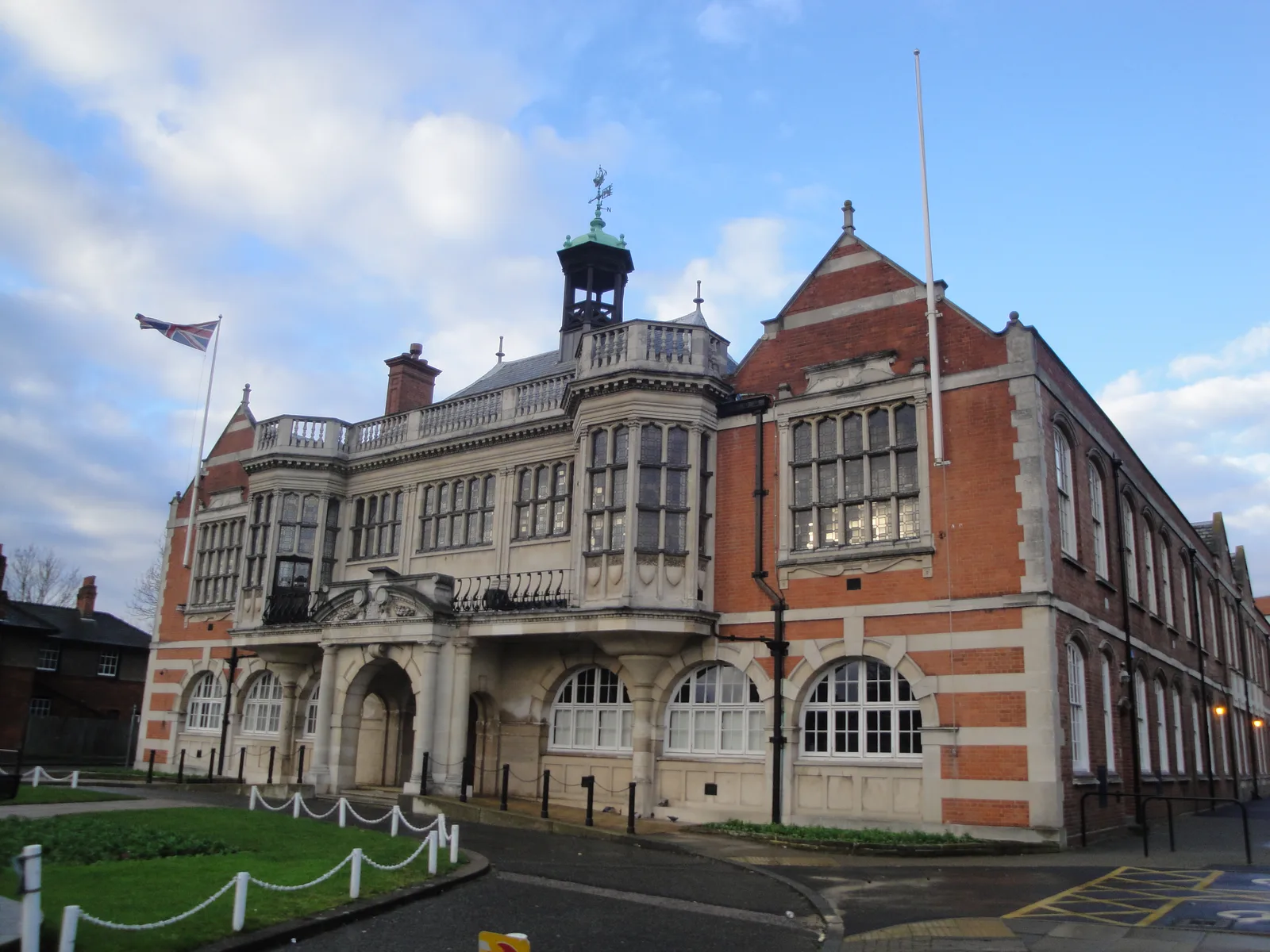
Hendon Town Hall, December 2011. Photo: Editor5807 (CC BY 3.0)
First step
Free enquiry
Reply time
We reply by email, usually within one working day.
Who answers
Simon Miller, Simon Miller Architects
Patch
NW, N, HA, EN, WD and around
The three questions people arrive with
Verdict first, reasoning second. If you are on a phone late at night, the first line of each card is the answer.
Is that it, then?
Almost never. Most householder refusals in outer London turn on size, bulk and the effect on a neighbour, not on whether you are allowed to extend at all. Read the paragraphs headed reasons for refusal. If they use words like scale, bulk, depth, overbearing or unneighbourly, those are objections to dimensions, and a designer answers them with a tape measure.
My neighbour objected. Did that do it?
Probably not, and some of it may not have counted at all. The council must consider objections, but national planning practice guidance is explicit that local opposition is not in itself a ground for refusal unless it rests on valid planning reasons. Read the case officer's report rather than counting objections. If the officer recommended approval and the committee refused it anyway, that is one of the strongest appeal positions there is.
What is this going to cost me?
An appeal is free. A new application is £548 (£575 from 8 December 2026). There is no fee to lodge a householder appeal. A fresh householder application costs £548. From 8 December 2026 it costs £575. An online application must be submitted and paid for by 5pm on Monday 7 December to get the lower fee. Planning Portal also adds its own service charge, from £99 including VAT. Drawings are on top. HomeOwners Alliance gives a guide price of £1,000 to £2,500 for a single storey planning application. Amending a refused scheme may cost less or more. Simon Miller Architects says its fees are fixed and transparent, so ask for the fee in writing.
Warning signs worth checking now
Things you can look at in the next five minutes, with no tools.
!
Count the reasons for refusal
Read only the paragraphs headed reasons for refusal, and count them. One reason means one problem. Several reasons that all describe the same bulk and depth issue are still one problem wearing different hats.
!
Write the deadline on the notice now
Take the date on the decision notice and add 12 weeks. That is your deadline for a householder appeal and it is unforgiving. One day late ends the right entirely. If you have had an enforcement notice in the last 2 years you may have only 28 days. Check GOV.UK the same day.
!
Look for the word principle
Reasons about scale, depth, overlooking or daylight are fixable. A reason that attacks the principle of development on the site, such as harm to the openness of the Green Belt or the loss of a dwelling, is a different and much harder conversation.
!
Search your own street on the register
Look up neighbouring addresses on the council's planning register. If a house four doors down had a similar extension approved in the last two years, those approved drawings are public, and they are the strongest single piece of evidence for a revised scheme.
!
Sort the objections into two piles
One pile for this will overlook my bathroom, which is material and has to be answered. One pile for it will block my view, it will hurt my house price, I do not like them. In law the second pile is worth nothing.
!
Measure from the original back wall
Measure how far the proposal projects beyond the rear wall of the original house, not beyond whatever is there now. Single storey, under 4 metres high, 3 metres deep on a terrace or semi, 4 metres detached, not in a conservation area, a house rather than a flat: you may never have needed permission.
If more than one of these sounds familiar, tell us what you can see.
Why this happens
Most cases come down to a short list. The job is to work out which, and to rule out the ones that matter.
It is simply too big
Bulk and massing out of scale with the original house and the plot is by far the commonest single reason a householder application is refused. The council is not objecting to an extension. It is objecting to that much of one.
What to do: Shave depth, height or width and resubmit. This is the cheapest reason to cure and the most likely to succeed second time.
It affects a neighbour
Overlooking from a new window or terrace, loss of daylight, or an overbearing effect on a neighbour's garden or main rear window. These are real material considerations and the council has to weigh them.
What to do: Obscure glazing, a setback from the boundary, lower eaves or a hipped roof form usually answer it without losing much floor area.
Design and character
Materials, window rhythm, roof form, loss of a front garden, or dominance of the street scene. This reads as subjective and is often the most annoying refusal to receive.
What to do: Usually the cheapest reason of all to cure, because it is answered with a change of materials or fenestration rather than a change of size.
Conservation area or heritage harm
Relevant around Hendon The Burroughs, Hendon Church End, Mill Hill and Hampstead Garden Suburb. The test is harm to the character or appearance of the area.
What to do: Harder, but rarely fatal. It is usually met with a more recessive design set further back, not by abandoning the project.
Trees, parking or the crossover
Trees with preservation orders, or any tree in a conservation area, where foundations would sit in the root protection area. Or loss of off-street parking where a crossover or hardstanding is involved.
What to do: Get an arboricultural report before redesigning. Foundation design can often be changed to keep the tree and the extension.
The application itself was incomplete
Missing plans, the wrong scale, no existing and proposed comparison, an unclear red line, or no design and access statement where one was required. Genuinely common, and entirely self-inflicted.
What to do: This is the one refusal that is pure paperwork. A complete resubmission of the same scheme often goes through.
What happens next, cheapest first
We scale the response to the problem. Most enquiries do not need the bigger step, and we will tell you if yours does not.
Free enquiry
Tell us the reasons for refusal and the date on the notice. We pass it to Simon Miller Architects, who can say which route might fit. Check your own appeal deadline the same day.
CostFreeTimeWe aim to pass it on the same working day
Measured survey and revised drawings
The route for a refusal about size, amenity or design. The reasons for refusal are answered one at a time on the drawings, and the approved schemes on your own street are used as evidence.
CostFixed fees, the practice says. Ask for yours in writingTimeDrawing time varies. Council decisions usually take 8 weeks
A written appeal to the Planning Inspectorate
The route where the scheme is right and the council was wrong, especially where the case officer recommended approval. It is decided on paper and usually a site visit. You cannot introduce evidence that should have been in the application, so the written case is the whole job.
CostFree to lodge. Ask for a written fee for the appeal statementTimeMedian 12 weeks once valid, decided September 2026
Things that are usually fine
Straight from Simon, who would rather tell you now than charge you later.
A refusal is not always a refusal of the idea. Read the reasons on the notice. If they are about size or design, a changed scheme may answer them.
Simon Miller, Simon Miller Architects
Neighbour objections do not decide an application on their own. The council has to decide on planning reasons and some objections are not planning reasons at all.
Simon Miller, Simon Miller Architects
A refusal does not stop you applying again. It stays on the council's planning register, so answer the reasons before you resubmit.
Tiers reflect membership of business groups we work alongside, not paid placement. Nobody pays to be listed.
Sometimes this is really a job for a different trade. We also refer to builder, and we say so when it is.
Questions people ask
How long do I have to appeal?
12 weeks from the date on the decision letter, for a householder refusal. It is different from other application types. It is hard. If you have had an enforcement notice in the last 2 years you may have only 28 days. Check GOV.UK the same day.
Do I still get one free resubmission?
No. The regulation that allowed a free resubmission within 12 months of a refusal was repealed on 6 December 2023. A fresh application now costs the full fee again. A great deal of planning advice online still repeats the old rule because it was written before that date.
What does a householder planning application cost?
£548 in England, rising to £575 on 8 December 2026. A prior approval for a larger home extension is £249, rising to £310 the same day. A certificate of lawfulness for a proposed extension is half the householder fee. An appeal is free. Fees also rise every April.
Is it better to appeal or to change the plans and reapply?
It depends on what the reasons say, not on which is cheaper. An appeal costs nothing but argues the scheme you already submitted, on the evidence you already gave. Reapplying costs £548 (£575 from 8 December 2026) but lets you fix the thing the council actually objected to. If the reasons are about size, reapply. If the officer recommended approval and members overruled them, appeal.
How many objections does it take to get refused?
The number does not matter. Objections are not votes. What matters is whether one raises a material planning consideration. A hundred objections about the view carry less weight than one about a window overlooking a bedroom.
Am I under an Article 4 direction in Hendon?
Probably not, even inside a conservation area. Barnet's 1987 Article 4 direction for Hendon The Burroughs covers 1 to 8 Burroughs Gardens and 63 to 77 odd The Burroughs, and nothing else. Hendon Church End conservation area has no Article 4 direction on the national register at all. Being in a conservation area and being under an Article 4 direction are two different things.
What are my chances on appeal?
The Planning Inspectorate does not publish a householder-specific success rate. It publishes an overall section 78 allowed rate, which was 31 per cent for July to September 2026 and 32 per cent for the year to March 2026. The 36 per cent householder figure quoted on a lot of sites does not appear in any official release.
Is the person drawing my plans actually an architect?
Only if they are on the Architects Register. The title is protected by law. A lot of good householder planning work in North London is done by architectural designers and technicians who are not architects. That is legal and often perfectly good, but it is a different thing, and you should know which you are buying.
Do you cover Hendon and Mill Hill?
Yes. Hendon, Mill Hill, Finchley, Edgware, Golders Green, Colindale and Barnet are our core patch, with members across North London and Hertfordshire.
What if I am outside North London?
Tell us the postcode. If nobody we recommend covers your area we will tell you.
Hendon, Mill Hill, Finchley, Edgware, Golders Green, Colindale, Barnet and the rest of North London and Hertfordshire. If you are outside this area, tell us where you are and we will point you to someone who covers you.
Tell us what has happened and your postcode. We tell you whether it needs anyone and what to do next. We reply by email, usually within one working day.
What's New in North London, every Thursday
What's opening, what's on and what's changing in Hendon. One free email.
Request sent
We have it.
We use analytics cookies to understand how our site is used and to improve it. Cookie policy